Thursday, January 14, 2010
Art Palm Beach Opens Tonight
Saturday, January 9, 2010
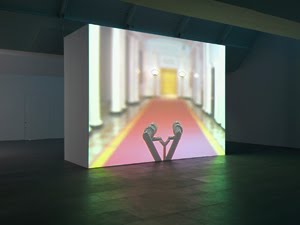
Omer Fast @ The Whitney
Omer Fast: Nostalgia
Through February 14, 2010
Read reviews of the work in Art in America and The New York Times.
Wednesday, January 6, 2010
Get ready, everyone!!!
For over 30 years, photo-eye has published our annual selections for Best Books of the year. Last year we started what we hope will be a long tradition of inviting photographers, writers, curators, publishers, and other photo professionals to select their 10 top books of the past year. Among the list are a few of the wonderful guest contributors from last year and some new additions.2009 Best Books Guest Contributors:
Ron Jude & Danielle Mericle
Marco Delogu
Antone Dolezal
Tricia Gabriel
John Gossage
Todd Hido
Anne Kelly
Jeff Ladd
Lesley Martin
Melanie McWhorter
Jeff Mermelstein
Eric Miles
Laura Moya
Martin Parr
Andrew Phelps
Markus Schaden
Paul Schiek
George Slade
Alec Soth
Ed Templeton
Sara Terry
Jennifer Thompson
Erik van der Weijde
Michael Wolf
Above content from Photo-Eye Newsletter
Tuesday, January 5, 2010
Chuck Samuels at Daziboa in Montreal
Since 1980, Chuck Samuels has been using the history of photography and cinema to explore philosophical questions concerning memory and the construction of the self in a body of work shaded with irony. His work, which has been seen widely in Canada and abroad, can be found in collections such as that of the Maison européenne de la photographie in Paris, the Musée de la Photographie de Charleroi.With Before Photography, Dazibao’s series of events and exhibitions based on the recovery and appropriation of images comes to a close. Chuck Samuels, in a vast deconstruction and re-organisation project, explores his personal history by means of a powerful critical and aesthetic strategy: fiction.
This task, which is much more than a stylistic exercise, derives from Samuels’ enquiry into the nature of the bond that tied him to his father. In Chuck Goes to the Movies, 108 photographs form the basis of an exuberant analysis of photographic representation in popular cinema and television from their early days until 1967, the year Samuels was introduced to photography by his father. Here Samuels, a kind of Zelig of the camera lens, offers up a delirious repertoire of possibilities, hypotheses and characters. Chuck’s Home Movies takes a similar tack, creating free associations between clips from a number of films with iconic depictions of photographers.
In the other two sections of the exhibition, Last Words on Photography and Chuck’s Family Photos, Samuels speaks directly of his memories of his father to paint an emblematic, perhaps even mythical, portrait of the “man with a camera”, thereby highlighting and interrogating an entire field of recent cultural history which has suddenly become accessible and even popular, one marked by the desire of individuals to see themselves depicted in it.
Above content from Daziboa Centre de Photographies Actuelles
Monday, December 21, 2009
Wednesday, December 16, 2009
Photographer Larry Sultan, Dies at 63

Sad news today. Pictures From Home is one of my favorite books. If you've never looked it over, you ought to.
Here is a link to the New York Times obituary....
Tuesday, December 1, 2009
Tuesday, November 10, 2009
Posting Video to Your Blog...
Be sure to select either Large or HD as the size for your video (preferably HD, unless you shot your video on a camera without this capability). Once you've posted your video to YouTube, it will be available on the site, although this can sometimes take several minutes to several hours depending on how busy the server is. DO NOT LEAVE THIS TO THE LAST MINUTE.
Once you are logged into YouTube, under your account name, select My Videos, then click on the title of your video. Your video will open and play in a viewing window on YouTube. Notice the box below containing both URL and Embed html codes. Be sure to select the customize icon to the right of the Embed code. Type in a width of 400. The height will be determined automatically. This will ensure that the Blogger window has enough room to show your video and that it will upload quickly. Keep the rest of the boxes unchecked. Please also ensure that your video is not set to "private" as this can cause viewing problems.
Now, highlight/select all of the code in the Embed box and select Copy. Then simply create a New Post on your blog, and paste the code into the text box.
When composing your post, you will only see html code, but when you preview or publish your post, you will see the embedded video file (see above). Your final task is to include the summary paragraphs for your video, which should be at the bottom of your post.
Friday, October 30, 2009
Joan Jonas Receives Lifetime Achievement Award from Guggenheim
Joan Jonas
Getting her start in New York’s downtown art scene of the 1960s, Jonas—like her artistic peers—set out to rethink the status of the artwork in the wake of Pop art and Minimalism. Adopting the idea of art-as-process, Jonas turned to performance, systematically yet intuitively exploring every aspect of how live events could be structured. She moved outdoors, emphasizing the physical properties of sound and vision in real space, and used mirrors to reverse her audience’s gaze, turning spectators into spectacle. Delving into new technology, she forged bold paths for a phenomenology of video, in all its permutations. She donned costumes and appropriated folkloric traditions, unearthing forgotten archetypes of the feminine just as the women’s movement gained power. By the early 1980s Jonas had begun to create complex, nonlinear narratives premised on literary and historical texts, reaching back to medieval Icelandic sagas, the work of the poet H.D., and, more recently, the writings and biography of famed art historian Aby Warburg.
Jonas has been the subject of several major retrospectives organized by the Stedelijk Museum, Amsterdam; the Van Abbemuseum, Eindhoven; the Staatsgalerie Stuttgart; and the Queens Museum of Art, Flushing, New York. She has performed and exhibited her work extensively, working internationally with institutions too numerous to list, and collaborating with such contemporaries as the Wooster Group. Most recently, she presented her multimedia installation Reading Dante at this year’s Venice Biennale to much critical acclaim.
Above content from www.guggenheim.org
Tuesday, September 22, 2009
It's MacArthur Fellow Time!!!
Camille Utterback, 2009 MacArthur Fellow
September 22, 2009
Digital artist Camille Utterback was named a MacArthur Fellow in 2009. The Fellowship is a $500,000, no-strings-attached grant for individuals who have shown exceptional creativity in their work and the promise to do more.
For more information, click HERE.
Above content provided by The John T. and Catherine D. MacArthur Foundation
Sunday, September 13, 2009
Leighton Pierce at LaViolaBank Gallery in NYC
I highly encourage anyone who will be in NYC during this event to go have a look.
Saturday, September 12, 2009
The Digital Print.
Identification and Preservation.
By Martin C. Jürgens.
The Getty Museum, 2009. 304 pp., 227 color and 49 black & white illustrations, 8x10".
Publisher's Description
This invaluable resource demystifies the complex, rapidly changing, and sometimes confusing world of digital print technologies. It describes the major digital printing processes used by photographers and artists over the past forty years, explaining and illustrating materials and their deterioration, methods of identification, and options for acquiring and preserving digital prints. A removable chart provides a ready reference for identifying specific materials.
Anyone involved in identifying and preserving digital prints-from conservators, curators, archivists, and registrars to photographers, artists, and printing studios-will welcome this comprehensive, one-of-a-kind volume.
Above content from photo-eye newsletter
Kim Boske - Mapping
Image Credit: http://www.kimboske.com/Just came across some pretty interesting work by this artist. This work is useful to consider alongside the next assignment dealing with montage in ART130.
Below is an excerpt from the 1000 Words Photography Magazine Blog about the work.
Boske is fascinated by the system of time and space. In her work she tries to capture this illusive reality by exploring the mutability of things. Her photos incorporate various levels, merging different moments in time together. They reveal phenomena that are impossible to see or witness with the naked eye.
In Mapping, Boske investigates how physical movement in time and space continually changes our perspective on the world. By eschewing individual perspective and instead combining multiple perspectives in a single image, she creates a new, layered reality. Here Boske presents a series of views of trees that she photographed from different angles. She combines the various shots to form a new image that shows each tree in its entirety. All the perspectives of the tree exist simultaneously; they overlap each other and join together to form a single image in a changing world of appearance and disappearance.
Above content from 1000 Words Photography Magazine
Friday, September 11, 2009
Caroline Martel's new installation encompasses archival and classic film footage. Opening @ Dazibao in Montreal this December
It is believed that several hundred thousand industrial films were produced in the United States between 1920 and the late 1970s. These commissioned films, with their precise goals and within the constraints of an acknowledged rhetoric, were never meant to be or perceived as works of art. Going against the current of received ideas on the topic, the documentary filmmaker Caroline Martel has carried out a close and thoroughly original study of these fringe cinemas to create works of art out of orphan films and film classics alike.
Cinémas de l’industrie is made up of two separate projections, one of industrial films and the other of films from the cinematic canon. In the break between these two practices thereby revealed, the codes they share are made visible, as well as a subtle play of interference and quotation. Using some twenty works covering a century (1896 to 1991), Martel composes a counterpoint that reveals the clichés and commonplaces of film language—all those techniques whose eloquence transcends genre. Frank B. Gilbreth’s one best way studies, films made by Bell Laboratories and other excerpts found in the course of patient research are seen alongside famous films, they sometimes imitate sometimes inspire, such as Modern Times, 2001: A Space Odyssey and Tron.
In La Chimie du temps, Martel examines the effect on the viewing experience of changes to the film stock over time. Even the worst-preserved films are rarely seen in their real state: the job of technicians in audio-visual archives is to make them “legible”, by restoring their colours for example. What then is the original of an archival image: its filmic source as it has been preserved or the corrected—altered—version that is nevertheless closer to how it first appeared? How should an archive be read?
Above content courtesy of Dazibao
Dan Graham's Greatest Hits at the Whitney
This retrospective will close soon at The Whitney - I'll just miss it. Of course. Loads and loads of great information about Graham and his work are available on the Whitney website - you can link to that HERE.
About the Exhibition
On view June 25-October 11, 2009
Dan Graham: Beyond surveys the artist's career from the mid-1960s to the present. As one of contemporary art's most innovative and influential figures, Dan Graham has been at the forefront of many of the most significant developments in art, including conceptual art, video and film installation, performance, site-specific sculpture, and musical collaboration. This exhibition—his first retrospective in the United States—examines each stage of Graham's career through his photographs, projects for magazine pages, films, architectural models and pavilions, performances, video installations, prints, drawings, writings, and his work with musicians Sonic Youth, Glenn Branca, and Japanther.
Graham was born in Urbana, Illinois, in 1942 and grew up in New Jersey, a suburban landscape that would inspire him throughout his career. He began his career as a writer, and founded and directed the short-lived John Daniels Gallery in New York in 1964, exhibiting the work of a new generation of conceptual and Minimalist artists—including Donald Judd, Sol LeWitt, and Robert Smithson. This experience had a deep influence on Graham's subsequent work, particularly the artist's relationship to his peers and to the culture at large as well as his interest in art’s economic and social framework.
Graham's rejection of the high-seriousness of modern art emerged at the same moment as Pop art in the early 1960s. "I love magazines because they are like pop songs," he once explained about his early conceptual magazine works, "easily disposable, dealing with momentary pleasures." He infused his approach with a wide range of literary, anthropological, and scientific influences, from cybernetics and topology to the writings of Jean-Paul Sartre, Gregory Bateson, and Margaret Mead. Graham's performances of the 1970s and his architectural pavilions of the 1980s to the present, with their kaleidoscopic refraction of bodily experience, demonstrate his interest in revealing the private self as part of a social, public context.
The fluid, democratic quality of Graham's work continues to exert a powerful influence on younger generations of artists. His desire for a connection to others mirrors our own; yet his work offers a way to critically explore that desire at a moment when interconnectivity and instant feedback are conditioning our collective consciousness to an unprecedented, global degree.
Above content provided by The Whitney Museum of American Art